
Knowledge
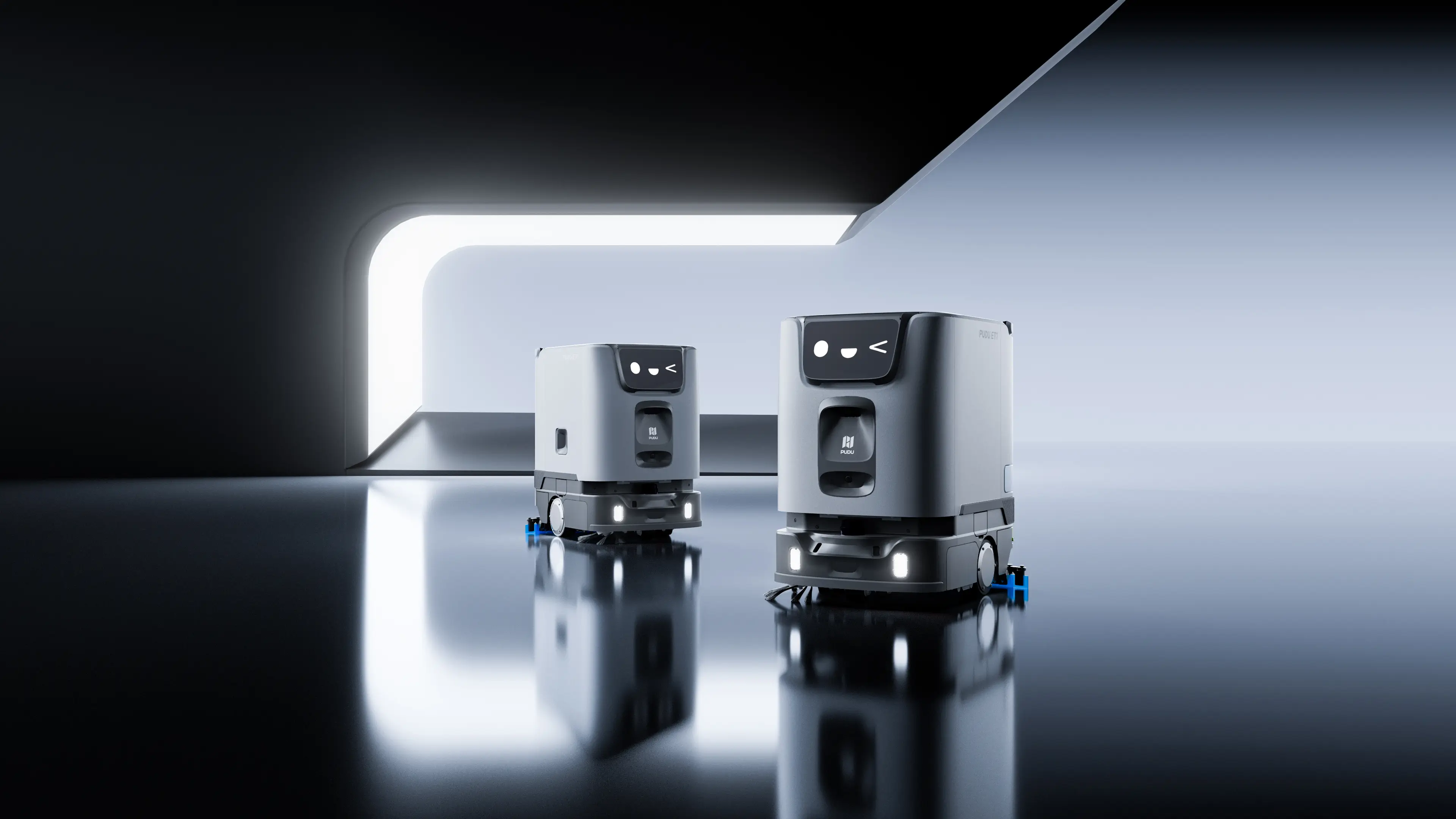
Pudu ET1 cleaning robot, product render
Image: Pudu Robotics

Market Overview · · 9 min read

Pudu ET1: The Compact Scrubber-Dryer for 100 to 800 m²

Pudu launched the ET1 on 12 August 2026 — the first machine of the new PUDU E Series and Pudu's answer to small commercial floors. That is a launch date rather than a shipping date: when units actually reach customers is not something we could establish from public sources, and the one German dealer listing we found showed the machine as "Ausverkauft". One thing up front, because everything below rests on it: we offer the ET1. It is the machine behind our filling-station programme, and it is new to that programme. What follows is therefore a documentation-based assessment — every figure checked against Pudu's official product pages and the launch press releases, read with the experience of an operator who runs the larger machines of the same family every day. What that gives you is what manufacturer pages do not provide: which performance figure belongs to which mode, what Pudu has not published about this machine at all, and the questions you want answered in a demo before you plan a floor around it.

Key takeaways

  • We offer the ET1 — it is the machine behind our filling-station programme. This assessment comes from official Pudu documentation.
  • Four cleaning functions in a single pass (sweeping, vacuuming, scrubbing, dust-mopping), an 8-in-1 docking station, 85 °C hot water: officially 300–720 m²/h for sites of 100 to 800 m².
  • The 720 m²/h belongs to the 39 cm dry track, not to the 30 cm scrubbing track — plan the wet programme at the bottom end of the range.
  • Not published: noise in dB, CE documentation, sensor suite, docking-station connection requirements. Until that exists, we make no night-operation or quiet-area promises for this machine.
01

What the ET1 is — four functions in the machine, eight in the station

The ET1 is the first product of the new PUDU E Series, announced on 12 August 2026. Pudu lists it on its German product page as a Scheuersaugroboter — a scrubber-dryer robot. Technically it is a wet machine with a dry stage in front: it sweeps and vacuums across 39 cm at the front, scrubs and dust-mops across 30 cm at the rear, in one pass rather than four runs. Suction is stated at 20 kPa, the scrubbing roller at a maximum of 800 rpm with 5,000 Pa of downward pressure, top speed at 1.0 m/s.

Two numbers get mixed up constantly here, so keep them apart: four functions are on the machine, eight are on the station. The docking station, per Pudu, handles automatic charging, clean-water refilling, wastewater drainage, detergent dispensing, roller-mop rinsing, squeegee rinsing, roller-mop spin-drying and water heating. What is not on that list is dust disposal: sweeping and vacuuming debris stays in the robot's 2.5-litre box and is removed by hand.

Hot water is the feature Pudu leads with: up to 85 °C. The station heats and fills, the machine maintains the temperature while it runs. The target is grease, coffee and sticky residue — convenience and food-service floors, in other words, rather than dusty warehouse concrete.

Two detection behaviours matter in daily operation. At carpet edges the machine lifts the scrubbing roller to keep the carpet dry. Over liquid spills it lifts the sweeping brush and the side brush instead of smearing them through it. The map it builds itself — per the official product page, powering on is enough, and no technician pre-mapping session is foreseen. An optional 21.5-inch advertising display is available for retail settings.
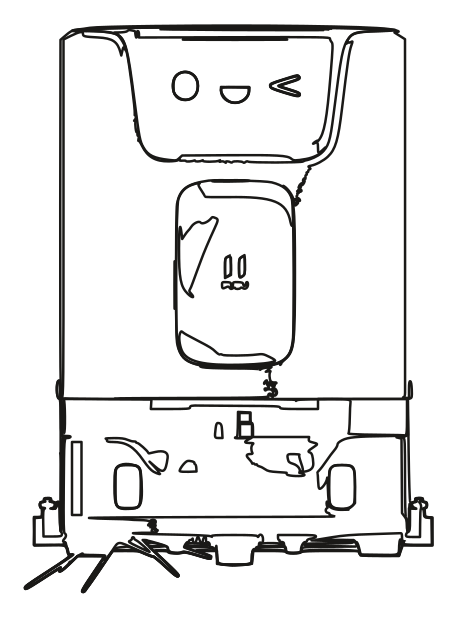
ET1
ET1
Pictograms: vectorized 1:1 from our product reference material — not illustrative icons.
02

The verified key figures — and the one number you must not misread

The official cleaning efficiency is 300–720 m²/h. The target area per site, per the launch press release, is 100 to 800 m². That range is not a tolerance band, it is a mode difference — and Pudu does not explain it anywhere.

So here is our own arithmetic, explicitly ours and not a Pudu statement: the wide track is the dry one. 39 cm at 1.0 m/s gives a theoretical ceiling of roughly 1,400 m²/h, and 720 m²/h is a little over half of that — plausible for real path planning with overlap and turns. Scrubbing, by contrast, works across 30 cm. Plan the wet programme at the bottom end, around 300 m²/h. For a 400 m² shop that means roughly 80 minutes of scrubbing plus station cycles — not 33 minutes.

The rest of the published data: 8 litres of clean water, 7.2 litres of wastewater, a 2.5-litre dust box. The battery is stated at 35 Ah, with neither voltage nor watt-hours published. Runtime is 2.5 to 4 hours with no breakdown by mode, charging time roughly 3 hours. Dimensions are 500 × 380 × 580 mm at approximately 45 kg. Minimum clearance is 50 cm in width and 60 cm in height.

That geometry is the actual news about this machine. A 380 mm body, a 50 cm aisle and a 60 cm underpass put it under fixtures and between shelving units that larger wet machines simply cannot enter. Everything else on the spec sheet is competent compact-class hardware; the size is what creates a job the rest of the class cannot do.

03

What Pudu does not publish about this machine

We found no numerical contradiction between the sources on the ET1. That sounds reassuring and is not: all secondary coverage of this machine currently traces back to the same launch press release. There is no independent test, no field report and no publicly downloadable datasheet. Uniformity, in this case, is not confirmation — it is a single source repeated.

Noise is the largest gap. No decibel figure exists anywhere: not on the English product page, not on the German one, not in either press release. For a machine with 20 kPa of suction we would expect commercial-vacuum noise levels in vacuum mode — that is our reading, not a measurement. Until a number exists, we make no promises for this machine about night operation in areas where people sleep or rest, and neither should any dealer.

The sensor suite is the second gap, and in Germany it is the commercially loaded one. Pudu states no sensor or navigation specification on its official pages — no LiDAR, no camera system, nothing. Descriptions circulating in the trade press do not come from official documentation, so we do not adopt them. That matters, because whether cameras are involved and where their data is processed is the first question a works council and a data protection officer will ask; our piece on data protection and cleaning robots sets out what you should have in writing. A CE declaration of conformity is likewise not yet public.

And the station: dimensions, power draw and above all the question of whether it connects to a fixed water and drain line or works from manually filled tanks are all unpublished. That is the difference between an installation and a plumbing job, and it also decides how hands-off the operation really is. Also open: water consumption per area, runtime per mode, connectivity and reporting, and wear-part intervals. The dust box, in every scenario, is emptied by a person.

04

The station shop — why this size class is the one we build on

Our filling-station programme is built on the ET1. What that programme covers in practice is on our page for station partners, and our industry page on filling-station cleaning describes what the cleaning day there actually looks like. The reason for the machine choice is unglamorous and geometric: a station shop is small, densely fitted out, and dirty in a wet way.

The fit is straightforward. Pudu's stated target of 100 to 800 m² per site covers the format. The 50 cm minimum clearance gets the machine between promotional displays and shelving. The 85 °C hot water is aimed at exactly the soiling a shop produces — coffee, grease from the bistro counter, the sticky track in front of the machine. The spill detection means a daytime pass does not smear what it is supposed to pick up. And the station closes the loop: charge, fill, drain, rinse, spin-dry, without anyone leaving the counter to do it.

What is not yet demonstrated is everything operational: runtimes under load, consumption figures, failure statistics — the machine is a few weeks old. Where we have solid numbers, we publish them; here we do not have them yet, and we are not going to construct any. That is the honest state of this programme, and you should hold us to it at the first review.

On the United States, which comes up in this context: the US precedent we describe on our station-partner page runs on a larger Pudu machine, not on the ET1. The ET1 itself is not part of that, and a US rollout is not on the table for now. At the end of July 2026 the FCC added foreign-made robotic devices to its Covered List; devices already authorised and sold are exempt, but new models need a separate clearance to enter the market. The ET1 is a new model, announced after that decision. For the German market this has no effect whatsoever — you will still be asked about it, so it is worth knowing what the rule actually says.

05

ET1 or CC1 — where the line runs

Our reference one class up is the Pudu CC1, the 4-in-1 machine we run daily — so this comparison sits between a documented machine and one we know from operation. The CC1 is officially rated at 700–1,000 m²/h, carries 15 + 15 litre tanks, is stated below 70 dB(A) with a maximum suction of 17,000 Pa and a top speed of 1.2 m/s; per its operation guide it measures 629 × 552 × 695 mm at 75 kg, with a 500 mm cleaning width including the side brush and a 400 mm scrubbing width. The ET1 is the smaller machine on nearly every axis: 300–720 m²/h, 8 + 7.2 litres, 30 cm scrubbing width, 500 × 380 × 580 mm, approximately 45 kg — and it has no published decibel figure, where the CC1 has one. Suction is the one axis that runs the other way: the ET1 is stated at 20 kPa against the CC1’s maximum of 17,000 Pa.

The line does not run along floor area alone. It runs along geometry and water. As long as your floor sits in the 100 to 800 m² bracket, is tightly furnished, and requires getting under fixtures, the ET1 is the right size — a 552 mm wide CC1 does not fit in there, and no amount of cleaning performance changes that. Once the area moves toward 1,000 m² and beyond, the relationship inverts: the CC1 is not only faster, it also carries enough clean water at 15 litres to finish a pass without a station visit. How much area the ET1 covers per tank fill is not published; at 8 litres that is a figure you want in hand. The station does refill automatically — but each visit costs time, and it presupposes that the station is connected to water in the first place, which Pudu has not documented.

If you are deciding within the CC1 family instead, our comparison of CC1 and CC1 Pro settles that question. If you want to sort the compact class as a whole, our overview of compact scrubber robots does that. And if you are earlier in the process and still weighing sweeping against vacuuming against scrubbing, start with which cleaning robot fits which operation — the category decision is worth more than the brand decision, and it comes first.

06

Availability, and what to test in the demo

On availability: the ET1 is listed in German specialist distribution, and the first stock allocation was sold out at the time of our check. The docking station is listed separately — it is not automatically part of the delivery, which is worth knowing before you compare two offers that look alike. Through us the machine is available in the same full-service model as the rest of our fleet. We do not quote prices anywhere on this site; what actually drives the operating cost of a cleaning robot is set out in our piece on cleaning robot costs.

When you get to a demo, test the things the datasheet cannot settle, and test them on your floor. Measure the noise at the actual operating point, in vacuum mode, in the position where people will stand — no published figure exists, so the measurement is the figure. Have the station clarified: fixed water and drain connection or manual tanks, power draw, footprint, clearance in front. Watch what happens at your carpet: the documentation says the roller lifts, it does not say the machine vacuums carpet dry, so find out which it is. Time how long the wet track takes to become walkable on your specific covering. Drive the machine down your narrowest real aisle, not the average one. And run the 2.5-litre dust box against a genuine day of your soiling rather than a demo hour.

Ask for documents in the same session: the CE declaration of conformity, a datasheet naming the sensor suite, a wear-part list with intervals, and a data processing agreement. Our honest position is that for the ET1 the list of things we do not yet know is longer than for any other machine in our programme — and we would rather say that here than discover it with you on site. If you want those questions asked with the machine in the room, that is what a demo appointment is for.

07

Frequent questions

Pudu officially states 300 to 720 m²/h. The range is a mode difference: the 39 cm sweeping and vacuuming track sits at the upper end, while scrubbing works across only 30 cm. Plan the wet programme at the bottom end, around 300 m²/h. As the target area per site Pudu gives 100 to 800 m².

That is not known. Pudu publishes no decibel figure for the ET1 on any official page or in either launch press release. We therefore make no promises for this machine about night operation in areas where people sleep or rest. For scale: for the larger Pudu CC1, Pudu officially states below 70 dB(A). Measure the ET1 on site before anyone commits to a quiet-hours schedule.

Per Pudu it performs eight functions: charging, clean-water refilling, wastewater drainage, detergent dispensing, roller-mop rinsing, squeegee rinsing, roller-mop spin-drying, and heating the water to up to 85 °C. Dust disposal is not among them — sweeping debris stays in the robot's 2.5-litre box and is removed by hand. Whether the station connects to a fixed water and drain line or works from manually filled tanks has not been published, and that difference decides your installation.

They are two size classes, not alternatives. The ET1 is designed for 100 to 800 m², measures 500 × 380 × 580 mm, weighs around 45 kg and scrubs across 30 cm. The CC1 is officially rated at 700 to 1,000 m²/h, carries 15 + 15 litre tanks and measures 629 × 552 × 695 mm at 75 kg per its operation guide. Tight, densely furnished floors below roughly 800 m² argue for the ET1; anything clearly above that argues for the CC1. We offer both machines — for the CC1 we have operating experience, for the ET1 not yet.

Yes. Pudu announced the ET1 worldwide on 12 August 2026, including a German product page and a German-language press release, and the machine is listed in German specialist distribution; the first stock allocation was sold out at the time of our check. Through us it is available in our full-service model. Still not public are a CE declaration of conformity and a downloadable datasheet. The US restriction on newly authorised foreign-made robotic devices does not apply to the German market.

See it instead of reading?

We show you the machines in 30 minutes at your site — free and non-binding.

Request a demo
Pudu ET1View machine →Pudu CC1View machine →