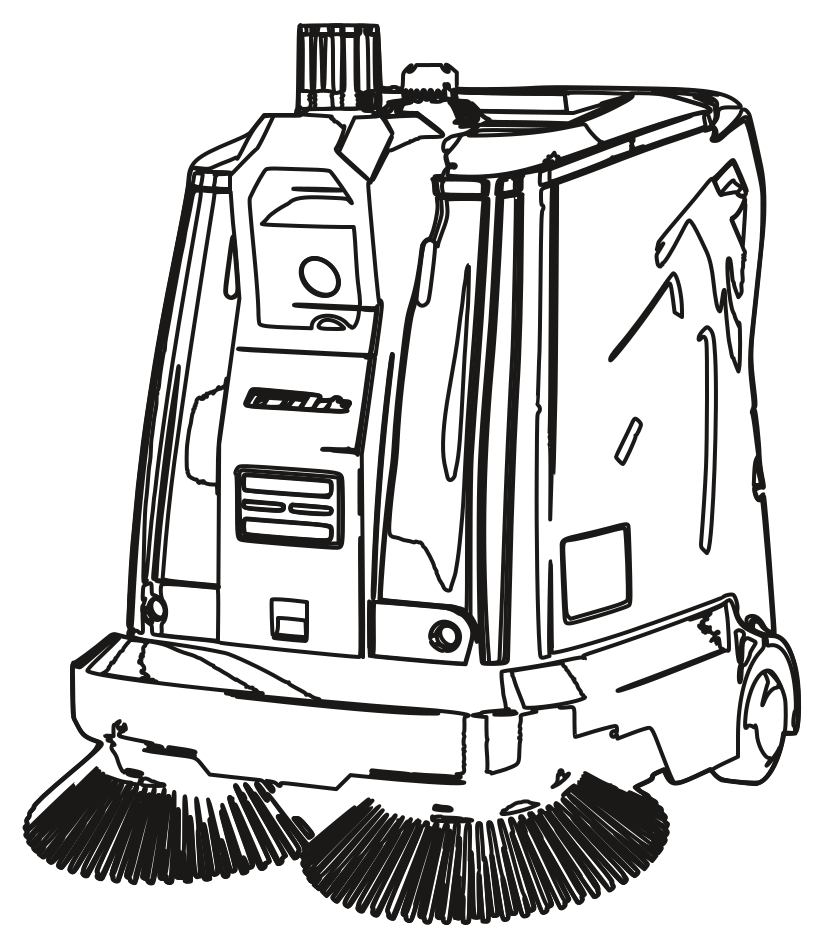
First the framing that decides how you should read everything below. CenoBots lists five models: S5, L3, L4, L50 and SP50. Three of them have been in service with us for a while — the L3 and the L4 as compact scrubber-dryers, the L50 as the industrial machine with 55 litres of fresh water. All three are wet machines. The S5 is the dry industrial machine of the line — the fifth model, the SP50, is a small indoor vacuum — and the S5 is the one that has only just joined our programme. What proximity to the brand gives us is the ability to read and place its data sheets. What it does not yet give us is a single measurement of our own on the S5. Where the text below says "per the manufacturer", that is not a formula — it is the boundary of what we know.
The S5 is an autonomous dry sweeping robot for industrial floors. Side brushes move material inwards, a suction motor pulls the dust through HEPA filtration into a 50-litre debris hopper, and an automatic filter shaker keeps the filter clear. Water and chemistry appear nowhere in this machine. The floor behind it is dry and immediately walkable and drivable — no film, no drying time, nothing that has to be kept clear of a forklift route. That is the decisive difference from the three L machines we run: those clean with water and leave a thin, quickly drying film. The S5 sweeps.
The interesting part is what CenoBots says about the debris range, because that is where the machine gets specific: wood chips, packaging film, plastic bottles, cardboard and screws are named explicitly in the brochure, and the product page adds fine dust, small metal rubbish and plastic bags. Bulky light debris is the category vacuum-type machines fail on — a sheet of film lies down in front of the intake instead of passing through it — and among the six sweeping robots whose documentation we read for our sweeper comparison, CenoBots is by some distance the most explicit about it. It is not alone in mentioning it: Pudu's official MT1 brochure names debris „like leaves and bottles" in passing. But naming a category in passing and specifying it item by item are different things. That is not proof the others cannot handle it. It is an indication of what this machine was designed for.