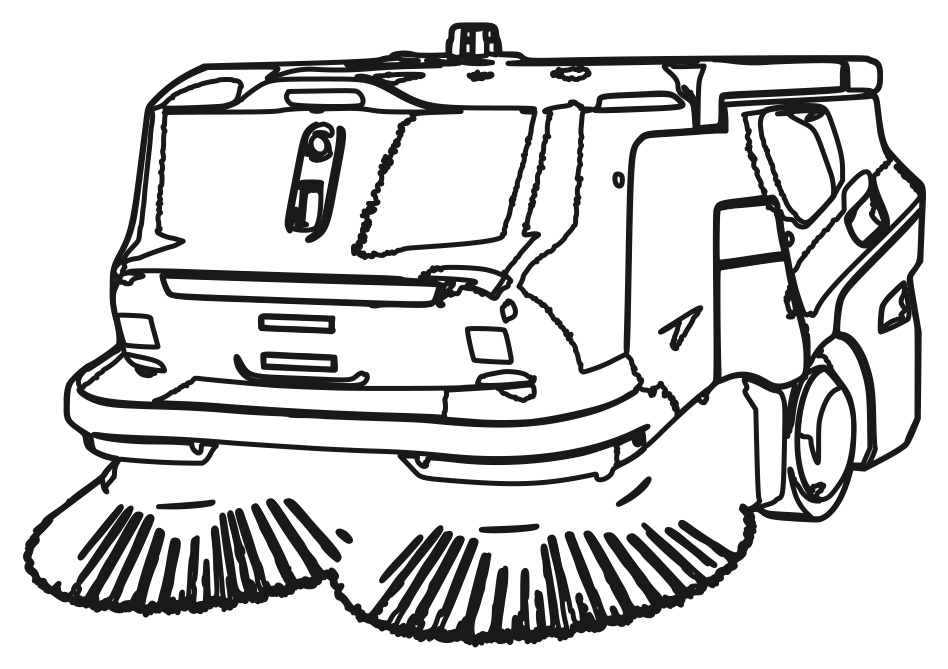
The search term is ambiguous, so the scope comes first. Special cleaning — degreasing production plant, cleaning extraction ducting, high-pressure work on facades and silos — is a separate trade with its own qualifications, its own permits and its own equipment. Nothing below applies to it. What follows is about the floor: maintenance cleaning of large hard-floor areas in production and in warehouses and logistics centres, and about which parts of that job an autonomous machine can take over.
The floors themselves are more varied than the word "concrete" suggests: power-trowelled and hardened concrete, epoxy or polyurethane coatings, screed, industrial tiles in wet areas, plus expansion joints, floor markings, dock levellers and ramps. The manufacturer restrictions follow that variety. The user manual of the CenoBots L50 names its intended surfaces as hard floors — "tile, wood floor, Concrete, terrazzo, Granite, etc." — in indoor areas. Coatings are not on that list, which is not a prohibition but a reason to test on your floor before signing anything.
Who does the work splits the market. Larger sites keep an in-house team for daily floor care and buy in a service provider for periodic deep cleaning; smaller ones outsource everything. Both models are under the same pressure, and it is a staffing pressure before it is a technology one — the shifts nobody wants to fill are the night and weekend shifts on empty hall floors. We have written about that pressure separately in our piece on the labour shortage in commercial cleaning. Robots do not solve it. They move a specific, repetitive, large-area part of it off the roster.