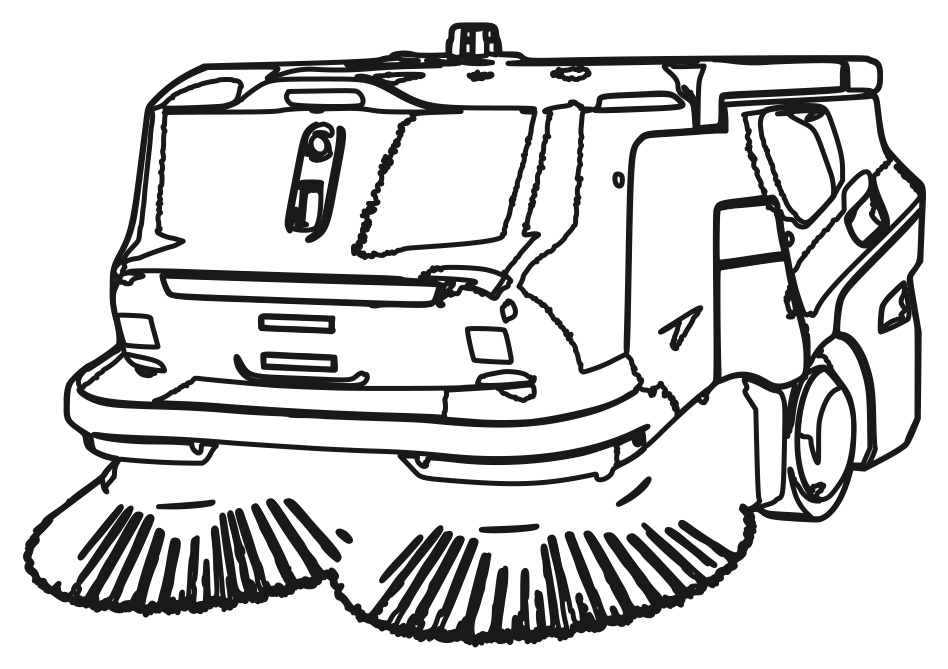
The base load in a parking garage is abrasion. Tyre rubber and brake dust settle as a fine, dark, slightly greasy film that binds to the floor and, once it is walked and driven into the surface, no longer comes off dry. On top of that sits everything loose: grit and salt residue carried in on tyres through the winter, leaves and paper blown through the open sides, cigarette butts at the lift lobbies, drinks packaging and receipts around the payment machines, and the occasional oil drop under a parked car. It is a debris profile that matches what the sweeper manufacturers describe almost word for word — Pudu's official MT1 brochure names "larger debris like leaves and bottles", and the MT1 Max deck says the machine removes "everything from cigarette butts and paper scraps to large bottles in a single sweep".
Geometrically, a parking structure is simple; operationally, it is difficult. The driving lanes are long, wide and largely free of obstacles, which is close to ideal for a machine. The bays are occupied in a pattern that changes hourly. The ramps concentrate everything: every vehicle carries water, salt and dirt over the same few metres. And the floors are not one floor — the deck itself is bare or coated concrete, while the pedestrian zones around lifts, stairwells and payment machines are usually tiled or coated. It also matters a great deal whether you are dealing with a fully enclosed underground car park, a parking garage with open sides, or a fully exposed top deck: the first has no weather but concentrated dust and poor ventilation, the second has wind-blown debris and damp entry zones, the third is outdoor in every practical sense.
Who cleans it, and how often, is usually the weakest part of the arrangement. Parking structures are the low-priority area in most cleaning contracts — a few machine passes a year plus a periodic deep clean — because they compete for the same scarce staff as the areas customers actually look at. That competition is the real driver behind automation here, and we set it out in our piece on the staffing shortage in commercial cleaning. The windows follow occupancy rather than convention: an office garage empties at night and on weekends, a shopping-centre garage after closing, and a residential garage is fullest at night and emptiest in mid-morning — the opposite of the usual night-cleaning assumption.